Teardown: Creality Wi-Fi Box | Hackaday

Creality, makers of the Ender sequence of 3D printers, have released a product called Wi-Fi Box meant to cheaply add community management to your printer. Naturally I needed to order one so we may take a peek, however that is definitely not a product evaluate. If you’re trying to management your 3D printer over the community, get your self a Raspberry Pi and install Gina Häußge’s phenomenal OctoPrint on it. Despite what Creality would possibly need you to imagine, their product is little greater than a poor imitation of this unimaginable open supply venture.
Even if you happen to handle to get it working along with your printer, which judging by early indications is a pretty big if, it received’t provide you with anyplace close to the identical expertise. At greatest it’ll prevent a number of {dollars} in comparison with going the DIY route, however at the price of lacking out on the colourful neighborhood of plugin builders which have helped set up OctoPrint because the defacto distant 3D printing answer.
That being stated, the {hardware} itself appears fairly attention-grabbing. For simply $20 USD you get a palm-sized Linux laptop with WiFi, Ethernet, a micro SD slot, and a pair of USB ports; all wrapped up in a reasonably rugged enclosure. There’s no video output, however that may hardly scare off the veteran penguin wrangler. Tucked in a nook and sipping down only some watts, one can think about loads of duties this little gadget could be nicely suited to. Perhaps it may act as a small MQTT dealer for all of your good house gadgets, or a low-power distant climate station. The prospects are almost limitless, assuming we are able to get into the factor anyway.
So what’s contained in the Creality Wi-Fi Box, and the way exhausting will or not it’s to bend it to our will? Let’s take one aside and discover out.
Surprisingly Elegant
It most likely received’t come as an enormous shock given the low buy worth, however there’s not an entire lot to the Wi-Fi Box. Creality wished to provide this product as cheaply as potential, and it reveals. The bundle doesn’t even embody an influence provide or the required micro SD card, although oddly sufficient they did pack in two USB cables. It appears clear that the corporate didn’t need to make investments greater than was mandatory into what’s in the end an experimental product. Some customers have even reported receiving a Wi-Fi Box at no cost when buying a 3D printer from Creality; with that form of enterprise mannequin, value discount is definitely the secret.
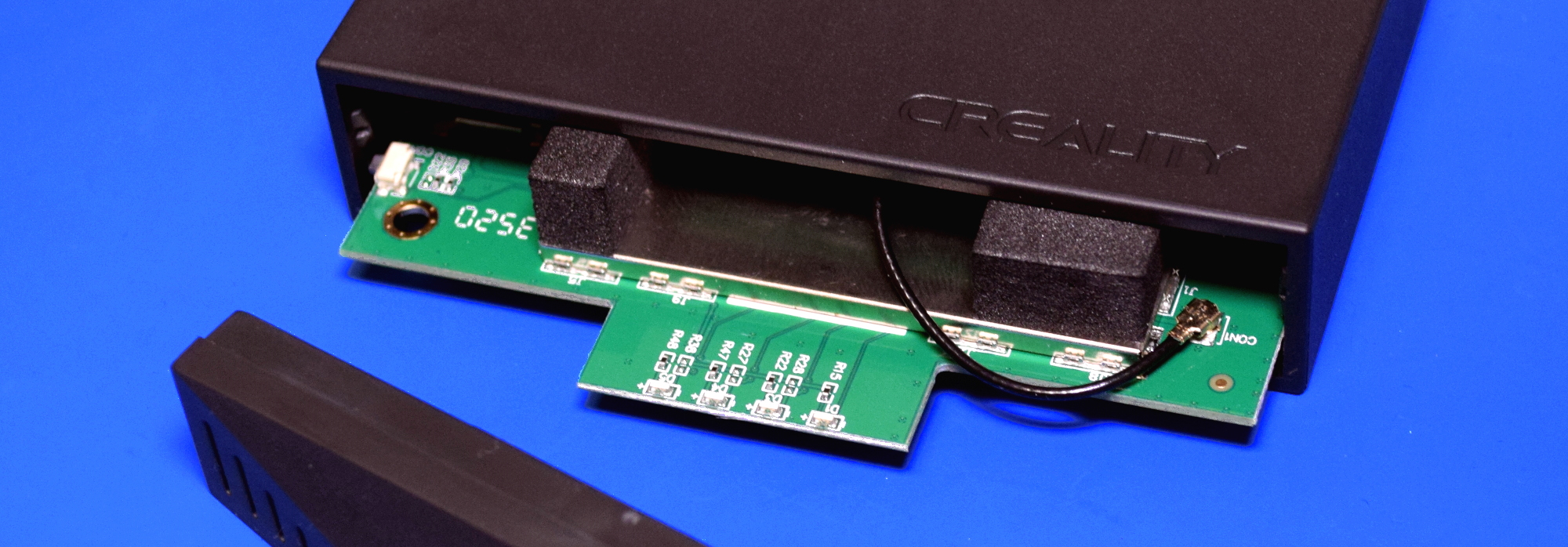
Even so, the system itself doesn’t really feel low-cost. In truth, fairly the other. The plastic enclosure is surprisingly thick and inflexible, and feels extra just like the injection molded case for an influence instrument. It’s most likely overkill for a bit blinking field that may reside a straightforward life perched subsequent to a 3D printer, however I’m definitely not complaining. It’s additionally attention-grabbing to notice that the case is one strong piece of plastic, and never a clamshell. To take away the PCB, you need to pry off the entrance panel and slide it out.


Note traces connecting the LEDs to the SoC GPIO pins.
With the board out of the case and the steel RF shields eliminated, we are able to see simply how little it takes to get the Creality Wi-Fi Box going. The MediaTek MT7688AN SoC encompasses a 580 MHz MIPS CPU in addition to built-in controllers for USB, SD, Ethernet, and WiFi, whereas the Winbond W971GG6SB gives 128 MB of DDR2 SDRAM. The SoC additionally has a number of GPIO pins, which we are able to clearly see have been damaged out to the 4 standing LEDs on the entrance of the board. Add in magnetics for the Ethernet port and a few filtering on the micro USB energy provide, and also you’ve bought your self a reasonably succesful Linux system in a compact, vitality environment friendly, and price efficient platform.
Of course, it’s not precisely a pace demon. Even the Raspberry Pi Zero may run circles round this little field. Which in the end is our first clue as to why Creality didn’t use a personalized model of OctoPrint for this product. Hardware that may run it successfully is just too costly; to hit their desired worth level, they needed to provide you with their very own simplified tackle the idea.
Digging In
So at this level we all know it’s a 580 MHz Linux field with 128 MB of RAM. Not terribly thrilling in 2020, however not precisely a paperweight both. But in fact it doesn’t matter how highly effective the {hardware} is that if we are able to’t get entry to the OS. The subsequent step is determining how badly Creality need to hold us out.
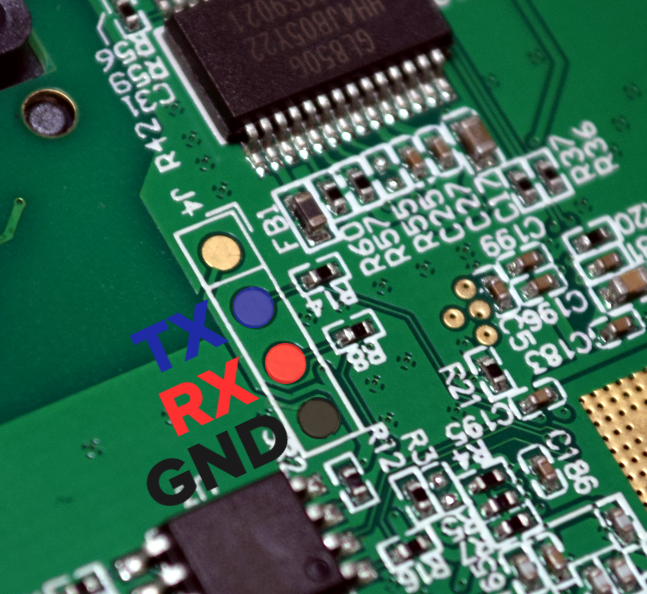 Our first break comes from the pretty conspicuous serial port header on the underside of the PCB. After hooking up a USB-to-serial adapter and stumbling upon the right pace of 57,600 baud, we are able to see the U-Boot and Linux kernel messages go by, and finally we discover ourselves at a login immediate. Unfortunately, we don’t know the password.
Now anybody who’s aware of embedded Linux hacking is aware of that is the place you convey out the modified U-boot setting variables to start out the system in single person mode. But attempt as I’d, I may by no means get into the U-Boot command line. After a strong 30 or 40 makes an attempt to interrupt the bootloader earlier than it masses the kernel, I’ve come to the conclusion that both my timing is exceptionally poor or entry to U-Boot has been disabled.
Where does that depart us? Well, proper subsequent to the serial port you’ll discover the 16 MB Boyamicro 25Q128 SPI flash chip that holds the firmware. You may pull the chip, learn its contents, modify the filesystem, and flash it again. If you intend on doing plenty of firmware fiddling, you could even install a socket for the chip to maintain the great occasions rolling.
Luckily, there’s a neater approach in. A peek into an official firmware replace file from Creality reveals the gadget will search for an set up.sh Bash script on the micro SD card and run it throughout startup. Any instructions we put into this file can be executed as root, which permits us to simply change the password with out breaking out the soldering iron:
#!/bin/sh
echo 'root:hacked' > /tmp/move
cat /tmp/move | chpasswd
With this file on the SD card, we’re now capable of log into the basis account over the serial port and begin exploring.
It’s a Router, Jim
When I first heard about this system, I had excessive hopes that it’d really be working OpenWRT. Unfortunately, what we even have is a really minimal BusyBox setting that was clearly designed for a wi-fi router. I do know this as a result of it appears the entire router performance remains to be intact, it’s simply been commented out wherever essential to hold it from being seen within the internet interface or beginning routinely.
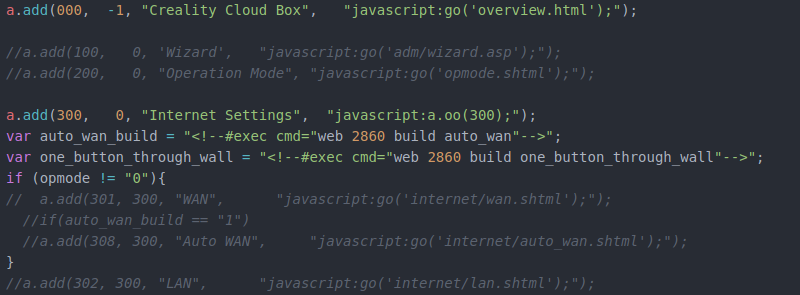
Similarly there are numerous applications and scripts on the system which can be completely pointless for controlling a 3D printer. From emulating an iTunes server and streaming MP3s to negotiating with 3G modems, the Creality Wi-Fi Box has loads of hidden options which can be locked behind an deliberately restricted internet interface.
Software Freedom
In abstract, we’ve bought a reasonably nicely documented SoC, a functioning serial port, an official firmware replace file to review, and a simple approach to get root entry. There’s even an current MT7688 subtarget for OpenWRT. All the items are right here, they simply have to be put collectively.
Luckily, we aren’t those that should do it. A developer by the identify of George Brooke, AKA [figgyc], has already performed the work for us. Even earlier than I used to be capable of end scripting this put up concerning the {hardware}, he’d recognized and glued a number of points (corresponding to including help for that Boyamicro 25Q128 flash chip) that have been stopping OpenWRT from booting on this board. Utilizing the inventory firmware replace mechanism, you can install his fork of the popular embedded Linux distribution on the Creality Wi-Fi Box with out making any {hardware} modifications. He hasn’t found out how to return to the inventory firmware but, however frankly, who cares?
With OpenWRT put in, the Creality Wi-Fi Box turns into a real general-purpose laptop. Thanks to an enormous array of packages and an energetic improvement neighborhood, this easy firmware swap turns a $20 gimmick into a great tool.
Escaping the Walled Garden
After spending some high quality time with the Creality Wi-Fi Box, I can’t assist however be reminded of the Recon Sentinel we took a look at a few months back. Both Linux-based gadgets supply us an simply reusable {hardware} platform, as little to no try was made to restrict the person’s skill to put in extra succesful software program on them. Even if it’s extra doubtless attributed to happenstance than any genuinely altruistic targets on the a part of the builders, we needs to be so fortunate to have extra business gadgets that may be simply modified by the top person.
But I ponder if the similarities would possibly in the end go a bit deeper. The Sentinel was designed to lock the patron into an costly service contract, thereby producing much more income than the sticker worth of the gadget itself did. Could Creality be planning one thing comparable with the Wi-Fi Box? Admittedly we haven’t seen any indication of that but, however it stands to motive that you simply don’t give away {hardware} at or under value except you’ve bought a plan to make that cash again sooner or later.
A clue could also be discovered within the product announcement for the Wi-Fi Box. It describes the “Creality Cloud”, a service that “offers an energetic and creative community where users can download unlimited STL files for free, share their models, and the most important feature, online slice & print”. While the fashions supplied on the service are free now, it’s not exhausting to think about that paid fashions may very well be launched down the road. By utilizing the Wi-Fi Box, Creality could hope clients turn into depending on their distinctive software program ecosystem. This may permit the corporate to create a monetized 3D mannequin repository, one thing their rivals within the market have to date largely failed to perform. Only time will inform.
In the meantime, any hacker or maker on the lookout for a brand new venture would do nicely to select up one in all these low-cost gadgets. Just be sure that to right away exchange its proprietary firmware with an open supply different that places you again in command of the {hardware} you paid for.
Source link